For 28 years I have lived in the same town. Surrounded by industrial estates, and busy roads. It would take me 4 or 5 miles to escape the busyness of life and find my way into the countryside. Now having moved to a small rural village, it takes me less than 5 minutes on foot.
My new, little village could be dropped within a square mile and you would still get some change. With a smaller space to explore, however, the net must be cast a little further for adventure. We are surrounded by other villages, some smaller and some bigger. All with their own history to uncover, and secret spots to discover.
I decided to connect them together with a 20-mile bike ride to discover more of my new home, visiting 10 different villages in a circular loop. I didn’t want to just ride through each, however. I wanted some kind of journey’s end in each village. A place to stop and look.
So what do most villages have in common, that I could set my target on? A pub was my first answer, but I quickly realised as good of a day out that would be, I probably wouldn’t remember much of it. The other option was a church. Usually the oldest building there, and often with a story to tell, churches are the focal points of small communities.
So on a sunny day in April, I filled a backpack with my camera and plenty of flapjack and set off in search of 10 churches.
St Michael’s Church, Stoney Stanton
Stoney Stanton is a village famed for its granite quarrying history. So much so, there is a tribute to it outside the church itself, surrounded on either side by quarries. Pride of place in the centre of the village. The church, along with an Inn and old school, would have been the heart of the village during its peak mining years.
Parts of the Church architecture date back as far as 1149, when the village would have been little more than an accumulation of cottages.

All Saints Church, Sapcote
Sapcote is home to a Bronze Age site, believed to once have been occupied by the Romans. All Saints Church is the oldest building in the village with a history which dates back to between the 13th and 15th centuries. Although, the history of the village long predates that, and it has seen many powerful occupants over the years. Parts of the village have come and gone through ongoing work across the centuries, including mills and ancient woodlands.
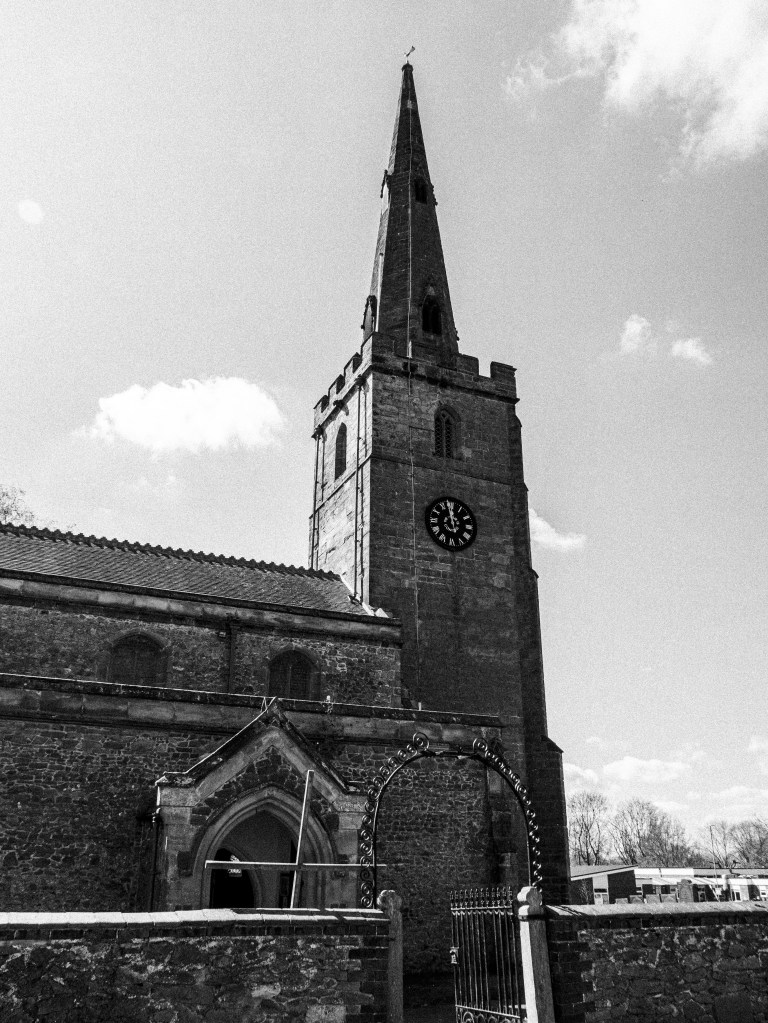
St Nicholas Church, Frolesworth
Standing proud, at the highest point of the village is St Nicholas Church, Frolesworth. It dates back to the 13th century, although through my research (first page of google) I found very little more history of the village.
I did discover that the circular national footpath, the Leicestershire Round, passes through the church grounds, and out towards an old manor lake which will be worth further exploring.
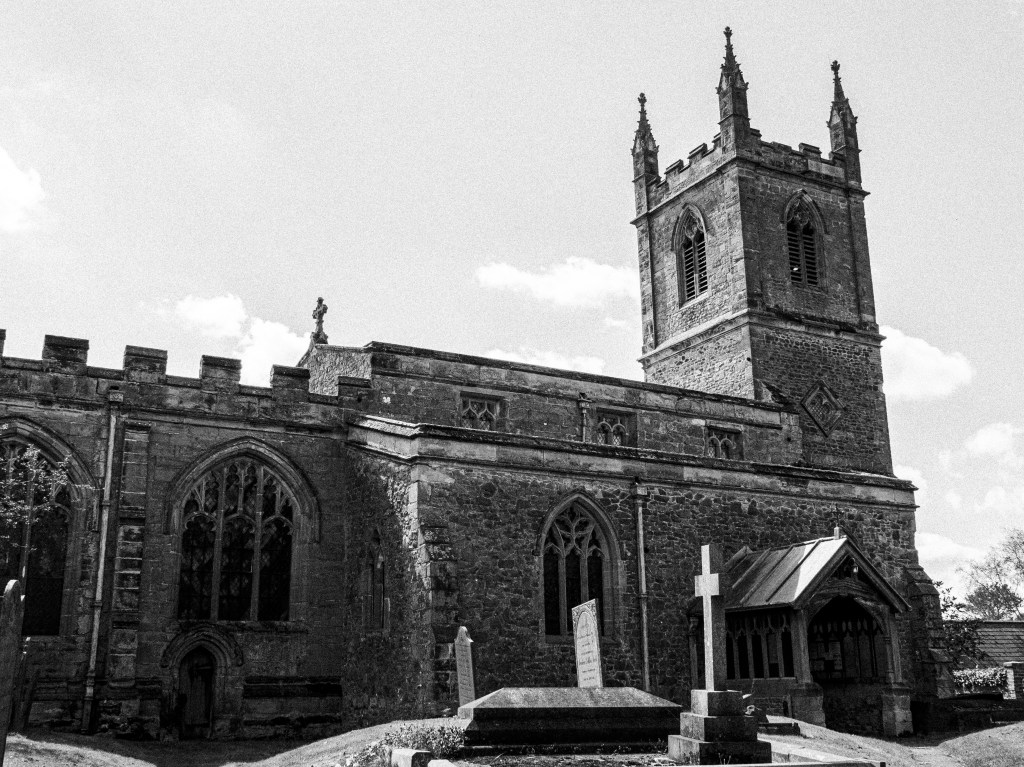
St Peters Church, Leire
The church of St Peter in the small village of Leire was probably the nicest of the lot, but also told me the least. Other than knowing it dates back to the 1500s. There is little information I could find on either the church or the village, which in itself I find interesting. Maybe I need to go back and explore a little deeper.

All Saints Church, Dunton Bassett
Sat at the top of the hill, I arrived at All Saints Church out of breath. The church, dating back to the 13th century is part of plenty of folklore tales. Scored columns within the church are theorised to have come from local wars within the 17th & 18th centuries, as they were used to sharpen weapons, whilst being held as a base.
The village is also believed to have been a Saxon settlement, gifted by William the Conqueror, and that a Saxon church pre-dated the current one.
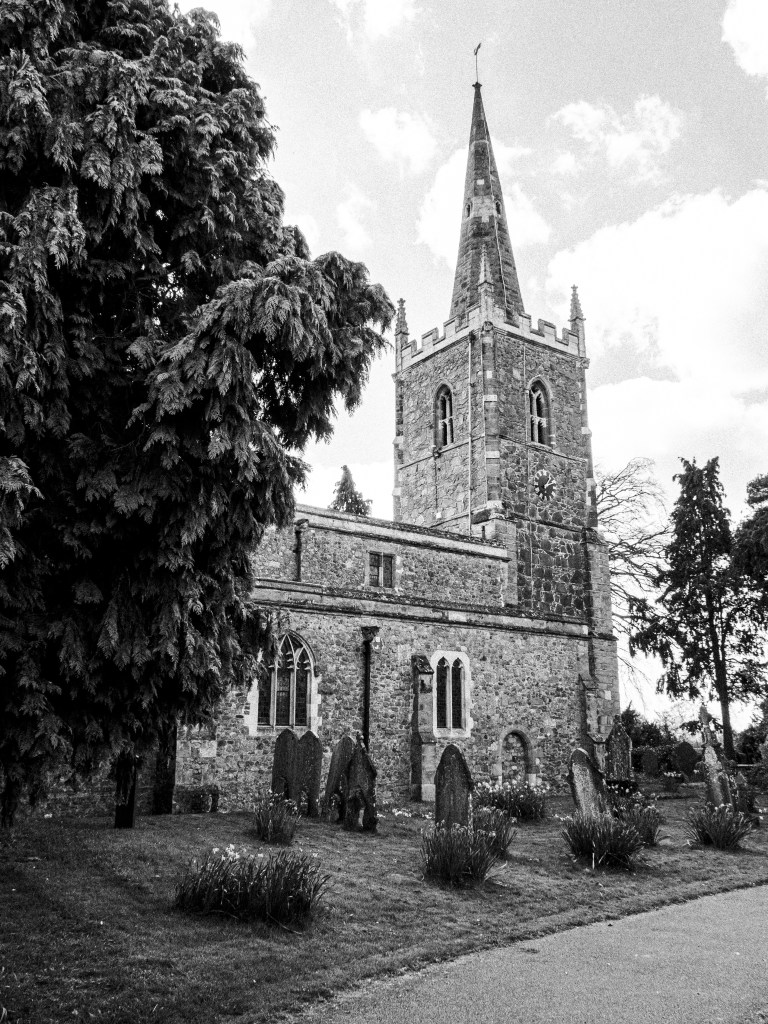
St Marys Church, Ashby Magna
Most churches stand tall and can be seen before riding into the village, but St Mary’s was hidden away up a lane and took some searching. It belongs to the medieval town of Ashby Magna, which is of Danish origin. This once would have been a large, busy village of its time, but its population has stayed static since its medieval history and it is now a small blip on the ever-growing map.
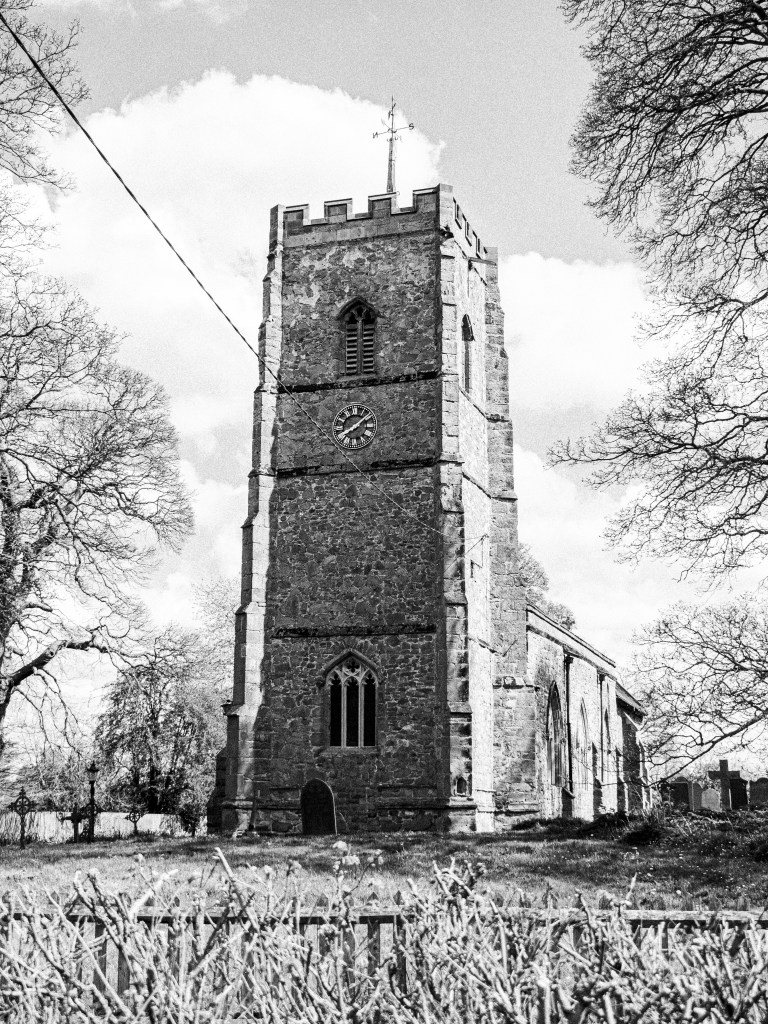
St Mary’s Church, Willoughby Waterleys
The 12th-century church of St Mary’s sits on the main road of Willoughby Waterleys. The small village, taking its name from ‘Willow tree farm’. The most interesting fact I could find from the village was in the 1881 census, over 57% of males living within the village worked in agriculture. Compared to 2011 when not a single person listed it as their occupation. A beautiful village, but one which has moved on from its past.
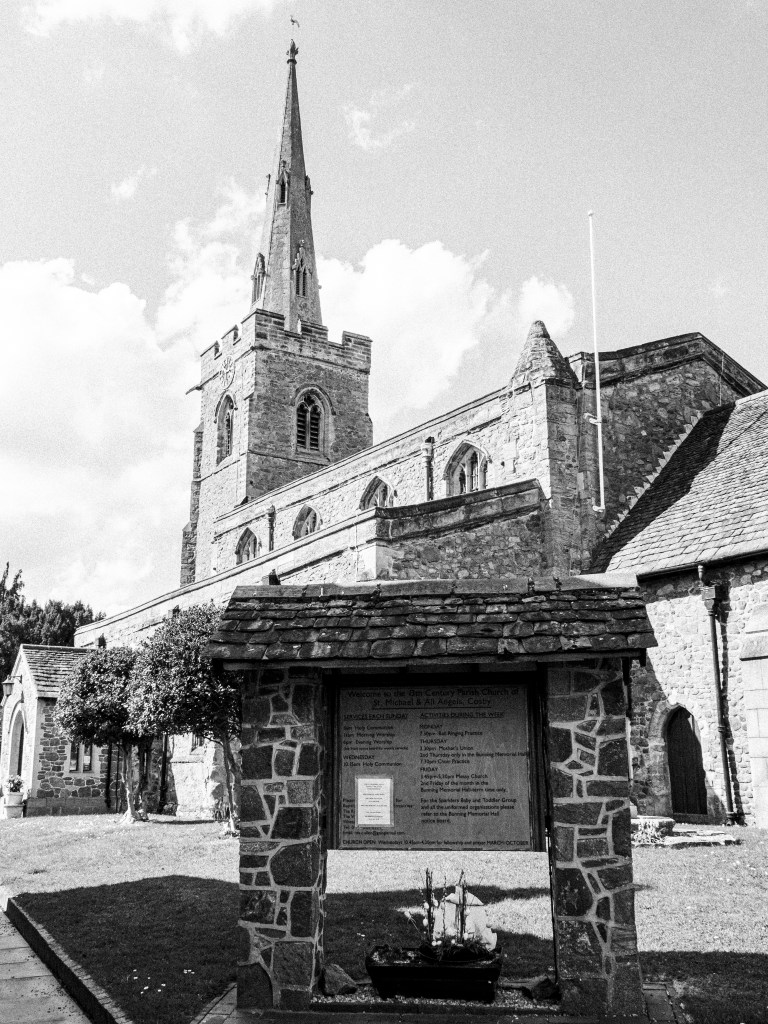
St Michael’s & All Angels Church, Cosby
Compared to the small villages that led up to Cosby, the village felt very busy. By which I mean, there was more than a Church and a pub. As vibrant as the village looked, it has a long-dated history, where there was believed to be a Roman settlement due to the close connection to the Fosse Way.
The Church of St Michael’s & All Angels sits, beautifully well kept, in the centre of the village. The church is thought to have been built in the latter part of the Middle Ages, although there are records of there being a place of worship there in 1220.
Cosby was once a farming settlement, but in 1767 the open fields of the village were enclosed by an Act of Parliament and the village turned to industrial work, which saw its population grow significantly.
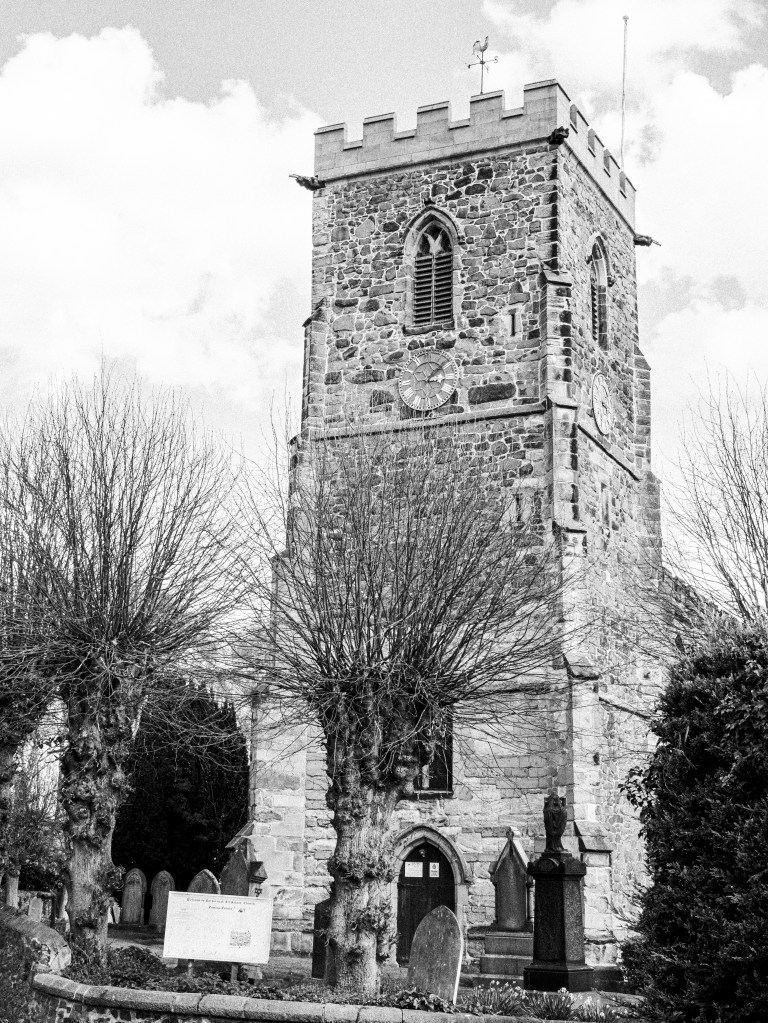
All Saints Church, Narborough
Narborough is an old settlement, which dates back to the Roman era, with roman artefacts having been found locally. All Saints Church itself, dates back to the 12th Century, although it is only the most modern place of worship on sight, with a Saxon tombstone being found nearby.
The village of Narborough is now mostly made up of new build housing and doesn’t quite have the charm of village life its history would suggest.
St James The Greater Parish Church, Huncote
As Huncote sits so close to its neighbour, Narborough, for a long time they shared parishes, with the church in Narborough and a Chapel in Huncote. The Chapel of St James fell into ruins in the 17th Century, where most residents would travel to All Saints Church to worship. In 1898 St James Church was built 50m away from the ruins of the Chapel, but due to a lack of funds, it was never completed. Although open and functioning in modern-day, the church remains half-built and without a tower.

Tired and hot, my ride finished there, but the adventure doesn’t. My look into these villages is merely a glimpse of the full picture. What it has done has given me a reason to go a look closer at some of these places and find their little secrets. That’s what local adventure is all about. Discovering that which is new to you.
 Get Up Go Outside
One thought on “Looking For Local Adventure”